Leash work shapes how your dog meets the world. Walks become fewer tug-of-wars and more calm exploration when the right tools match the right dog and the right handler. At Coastal K9 Academy, we see the same pattern over and over: owners reach for the tool that promises an immediate fix, then discover nuance, timing, and consistency matter far more than the gadget. Still, the tool matters. The right leash system can speed learning, reduce stress, and keep both dog and owner safer on crowded Virginia Beach sidewalks or at the dog park.
I train everything from rowdy young labs to sensitive rescue German shepherds. I carry five main leash setups in my bag for different personalities: a flat webbing leash for basic work, a double-ended lead for intermediate control, a martingale for dogs who slip collars, a front-clip harness for reactive pullers, and a long line for recall and distance work. Below I lay out how each tool works, when to choose it, and the trade-offs you need to consider. Expect practical examples, numbers where they matter, and the sorts of judgment calls we make at Coastal K9 Academy when tailoring an approach for a client in Virginia Beach VA.
Why tools matter Leash training is about communication. Your dog reads pressure, release, body position, voice, and timing. A leash channels pressure and creates points of contact that you can use to shape movement. Use the wrong point of contact and you may inadvertently reward pulling, trigger anxiety, or teach a dog to avoid you. Use the right contact, timed with voice and body, and you accelerate learning without force. For example, a front-clip harness gives a moment of directional feedback useful for dogs that charge ahead; a flat collar teaches a proper stop if you use a quick, consistent cue. Tools do not replace training; they enhance it when matched to goals.
The basic candidates: what they are and how they feel Flat webbing leash: the everyday workhorse. Usually 4 to 6 feet long, often 1 inch wide on medium and large dogs. It’s inexpensive, low-profile, and familiar to most dogs. Use it for heel work, loose-leash walking, and group classes where you need a tidy length. When taught with consistent cues, the flat leash trains polite walking without surprising pressure.
Slip or choke collar: a metal loop that tightens under tension. It has an immediate, more pronounced correction than a flat collar when connected to the neck. This tool can work for experienced handlers who can time releases precisely. It is not a beginner tool because timing mistakes can punish breath or throat, and some dogs panic under neck pressure.
Martingale collar: a hybrid that tightens only a little, designed for dogs that slip standard collars, like greyhounds. It limits escape without the harsh closure of a choke chain. We use martingales often for sighthounds and for rescue dogs during early walks when slipping is a real risk.
Front-clip harness: clips across the chest, redirecting forward motion. When a dog pulls, the harness turns their shoulders back toward you. It does not increase neck pressure and can reduce lunging in many dogs. Some dogs learn to lean through the harness if handlers don’t combine it with reward-based attention work.
Back-clip harness: comfortable for running and casual walks but offers little steering. I do not recommend it as the primary training tool for dogs that pull because it allows forward force to remain unmodified.
Head halter: wraps around the muzzle and behind the ears, applying gentle control to the head. It provides immediate directional control much like a horse halter. Good for reactive dogs when combined with counterconditioning. Some owners worry it looks harsh; the pressure is mild but training is required so the dog accepts it calmly.
Double-ended lead: two clips, one to the collar and one to the harness or two points on a harness. It provides subtle control and quick transitions from loose leash to closer handling without changing equipment. Therapists and trainers use these during behavior modification phases with stronger dogs.
Long line: typically 15 to 30 feet, used for recall, distance work, and building self-control. It lets the dog experience freedom while maintaining safety. Coastal K9 Academy uses long lines for reliable recalls in parks and beach dunes where off-leash is not safe.
Choosing by personality, not by label Pick a tool based on the dog’s learning history, sensitivity, and your skill level. A stoic adult husky bred to pull will need different gear than a 6-month-old shepherd who finds pressure confusing.
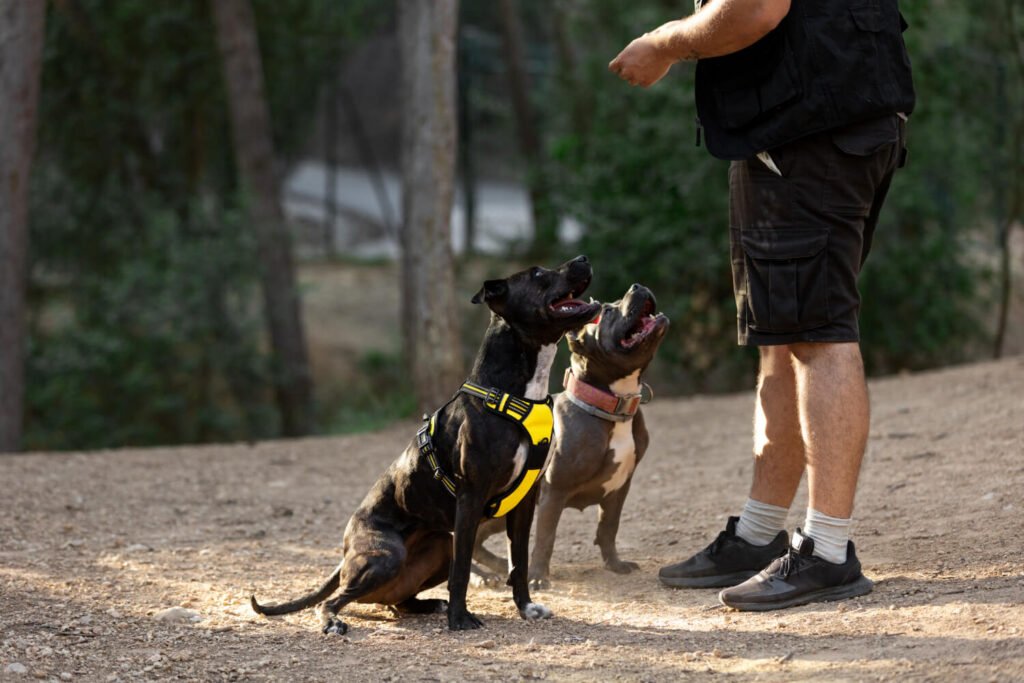
Example 1: A 2-year-old lab that pulls every time he sees a squirrel. He learns quickly from mild correction. Start with a front-clip harness to redirect lunging, pair it with reward for focus, and move to a flat leash as loose-walking becomes reliable. We see progress in days when owners reward attention 5 to 10 times on a 10-minute walk.
Example 2: A rescue terrier that slips collars and bolts when startled. Begin with a martingale plus a double-ended lead connected to a well-fitting harness. Teach recall on a 20-foot long line away from heavy triggers, using high-value treats. The martingale prevents escape while the double-ended lead gives extra security in crowds.
Example 3: A reactive shepherd that lunges and barks at other dogs. A head halter combined with front-clip harness gives layered control. We use the halter only after desensitization so the dog does not associate the muzzle with punishment. Over weeks, we fade reliance on the halter as counterconditioning reduces reactivity.
How to match tool to goal When your goal is polite walking in neighborhoods, choose a simple, low-friction solution: flat leash and a well-fitted collar or martingale. If the goal is reducing lunging, choose a front-clip harness or head halter and layer in attention training. For off-leash recall and play at the beach, use a long line to build reliable returns before releasing.
Practical fitting and sizing tips A wrong fit ruins a good tool. Measure your dog before buying. Collars should be snug enough to stay on, but you must be able to slide two fingers under. For harnesses, chest straps should sit low enough to avoid rubbing the armpits, but not so low that the dog can wriggle out. Head halters require gradual conditioning: put it on for short sessions with treats, build to a full walk over a week.
One technique we use with new harnesses: leave the harness on during quiet reward sessions at home for 5 to 15 minutes to let the dog choose calm behavior while wearing it. Repeat twice daily for several days before using outdoors. That reduces the chance of the harness itself becoming a stressor.
Timing, reward, and the invisible hand Tools communicate via pressure and release. The invisible hand is your timing. When a dog walks close and you stop tension, you reinforce that proximity. When the dog pulls and you step forward without release, you accidentally reinforce pulling. A concrete rule: when you correct, you must deliver an alternative behavior and release within 1 to 2 seconds of the desired response. Holding for minutes turns communication into punishment and confuses dogs.
A quick lesson from a Coastal K9 Academy class: one owner jerked a leash every time his beagle pulled, but he did not reward the beagle when it stopped. The beagle learned to resist, not to offer alternative behavior. Within two sessions, we taught the owner to reward any brief slack, then extend the slack little by little. The beagle’s loose-leash walking improved from zero to three minutes of consistent slack by session four. Small wins stack when timing is immediate and consistent.
When to avoid certain tools Avoid slip collars and choke chains for inexperienced handlers. Avoid back-clip harnesses as primary tools for heavy pullers. Be cautious with head halters around small dogs who may paw at them and create panic if left unsupported. If a dog has neck or trachea issues, avoid tools that compress the neck. When in doubt, consult a trusted dog trainer near me or a vet.
A short checklist for first appointments (one list allowed)
- Bring your dog’s current collar and leash, plus any harnesses you already use. Have small, high-value treats in a container that is easy to access. Note any escape history, vet diagnoses, or bite record before the session. Be prepared to try at least two different leash systems during the consultation. Allow 45 to 60 minutes for fitting and basic movement work.
How Coastal K9 Academy approaches progressive fading We rarely use a tool forever. The goal is flexible, resilient behavior that persists across distractions and environments. At Coastal K9 Academy, we program three phases: control, transition, freedom. Control uses the tool that safely creates the desired movement. Transition pairs the tool with rewards, and we gradually fade the tool while keeping rewards. Freedom is achieved when the dog performs reliably inside the expected thresholds without that tool.
For example, with a young pit mix that lunged, we used a front-clip harness for two weeks while teaching a name-look and a "let's go" cue with 80 percent consistency in low-distraction settings. Over the next month we reduced harness use to walks near busy streets only, and by three months the dog walked politely on a flat collar in 7 of 10 neighborhood walks. We still recommend carrying the harness for high-distraction outings for another six months.
Edge cases and trade-offs Some tools provide immediate behavior change but can create other problems. A choke chain might stop pulling but can damage trust or cause flinching that affects learning. A head halter might quiet a reactive dog but make redirecting attention harder if the dog resents the muzzle. Harnesses reduce neck strain but can let the dog brace with shoulder power.
Costs matter. A good harness or head halter ranges from $25 to $70. Professional fitting is often free at a trainer’s first session but can cost $30 to $75 if done separately. Time is the larger investment: expect at least four to eight weeks of consistent practice to solidify new walking patterns.
Common mistakes owners make One: changing tools frequently without consistency in cues. Dogs need repeated pairings of a cue, the tool’s feedback, and reward. Swapping tools mid-process confuses that association. Two: over-reliance on a tool without teaching alternatives. Tools should be used to teach behavior, not to mask it. Three: poor fit. A harness that rubs or a head halter that pinches creates avoidance behaviors unrelated to leash manners.
When to call Dog Training in Virginia Beach VA a trainer If your dog lunges aggressively or shows fear-based reactions, seek a professional who can assess body language and recommend a multi-layered plan. If you repeatedly lose control during walks, or your dog has a history of escaping, a hands-on session with a trusted dog trainer near me will save time and reduce risk. Coastal K9 Academy offers in-home and outdoor consultations affordable dog training near me across Virginia Beach VA, so handlers learn in the real contexts where problems occur.
Real outcomes to expect Progress varies. Puppies and food-motivated adults often show measurable improvement in 2 to 6 weeks with daily 10 to 15 minute practice sessions. Dogs with deep-set anxiety or long-standing pulling habits may need months of gradual exposure and fading. The difference between a 25 percent improvement and 90 percent consistency often comes down to owner practice, not magic of the tool.
A final pragmatic note No single piece of equipment is a cure-all. The best strategy uses the right tool for the dog and the phase of learning, combined with rewards, timing, and realistic practice. If you live in Virginia Beach VA and search for dog training near me or trusted dog trainer near me, look for trainers who explain not only what to use, but why. Coastal K9 Academy believes in matching tools to temperament, teaching owners how to time releases and rewards, and fading equipment as the dog gains reliability. That approach turns stressful walks into an everyday pleasure.
If you want help choosing the right leash system for your dog, Coastal K9 Academy offers fittings and on-leash coaching at public beaches and neighborhood routes across Virginia Beach. We’ll try different setups, show you how to read your dog’s body, and build a step-by-step plan tailored to your life. The right tool used well changes the way your dog experiences the world, and that change is worth the work.
Coastal K9 Academy
2608 Horse Pasture Rd, Virginia Beach, VA 23453
+1 (757) 831-3625
[email protected]
Website: https://www.coastalk9nc.com